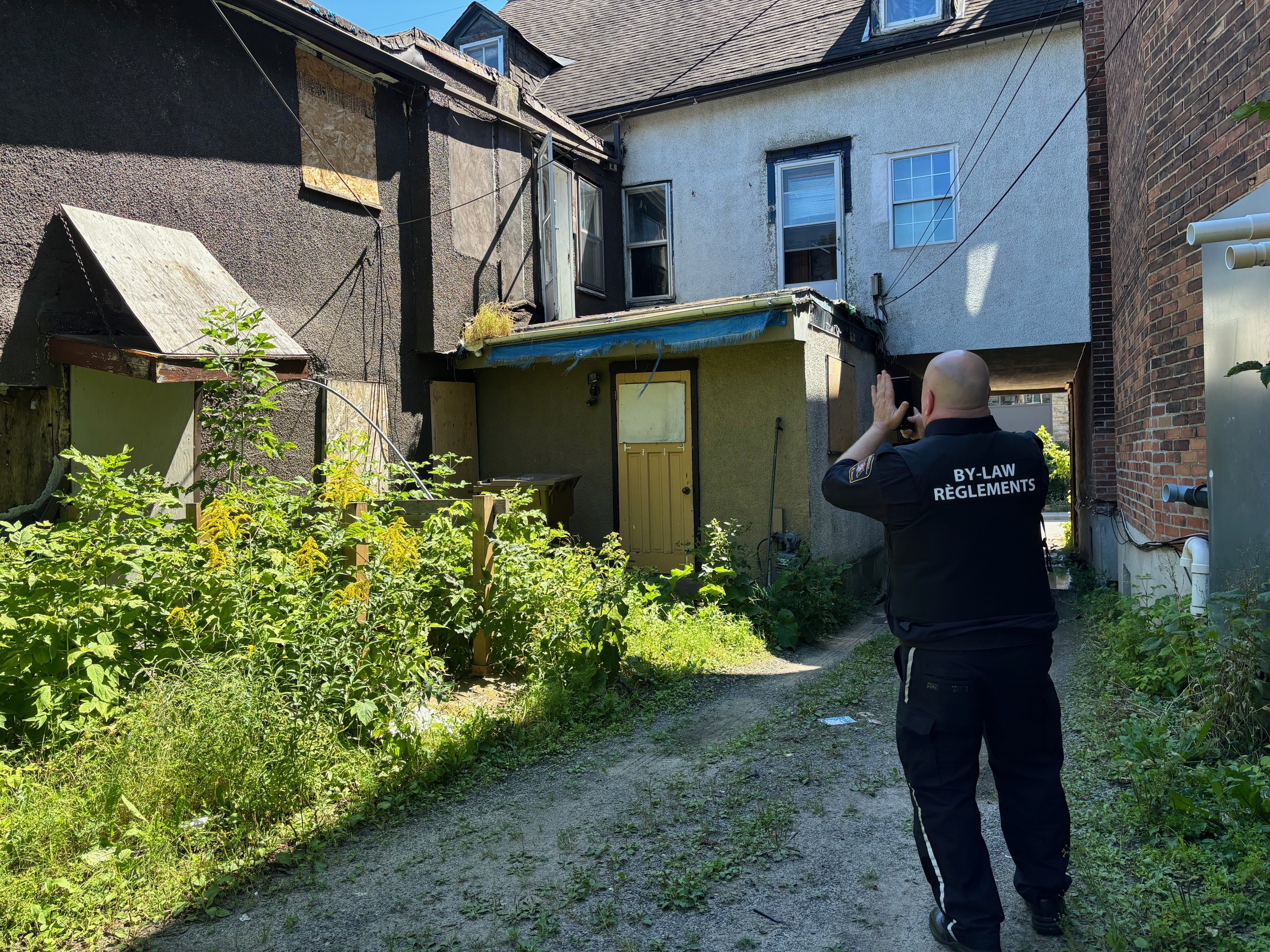
Every neighbourhood has that one house – one that has been abandoned for years, with boarded-up windows, overgrown weeds, and a growing collection of debris and graffiti. Residents complain, and despite issues being addressed as they arise, the underlying problem remains. These properties don’t just drag down the appearance of the neighbourhood; they can pose a real risk in terms of fire safety, public health, and community wellbeing. These are what we call problematic properties, defined by the City as specific addresses, whether occupied or unoccupied, that are a consistent source of disturbances and complaints. These properties are often linked to repeated issues around crime, disorder, and neglect.
In April 2024, I brought forward a successful motion at City Council to create a Problematic Properties webpage, to help residents easily understand what qualifies as a problematic property, how to report issues through 3-1-1, and what City departments are involved.
This work has evolved into a pilot project focussed on Wards 12 and 14 that brings together Property Standards Officers, Ottawa Police, Ottawa Fire Services, and Community and Social Services in a coordinated effort to tackle the most serious properties. So far, 11 high-priority sites in Vanier, Sandy Hill, and Lowertown, have been targeted for joint enforcement.
This pilot has already shown positive results, with increased accountability, quicker response times, and regular updates to community partners. In Lowertown, for example, the pilot has led to the planned demolition of long-standing problematic properties on St Patrick Street and Guigues Avenue, sites that have been a source of community frustration for years. I’m committed to continuing this work to improve safety and quality of life in our neighbourhoods.
To learn more, visit Ottawa.ca/living-ottawa and click on the Problematic Properties link.


 English
 French